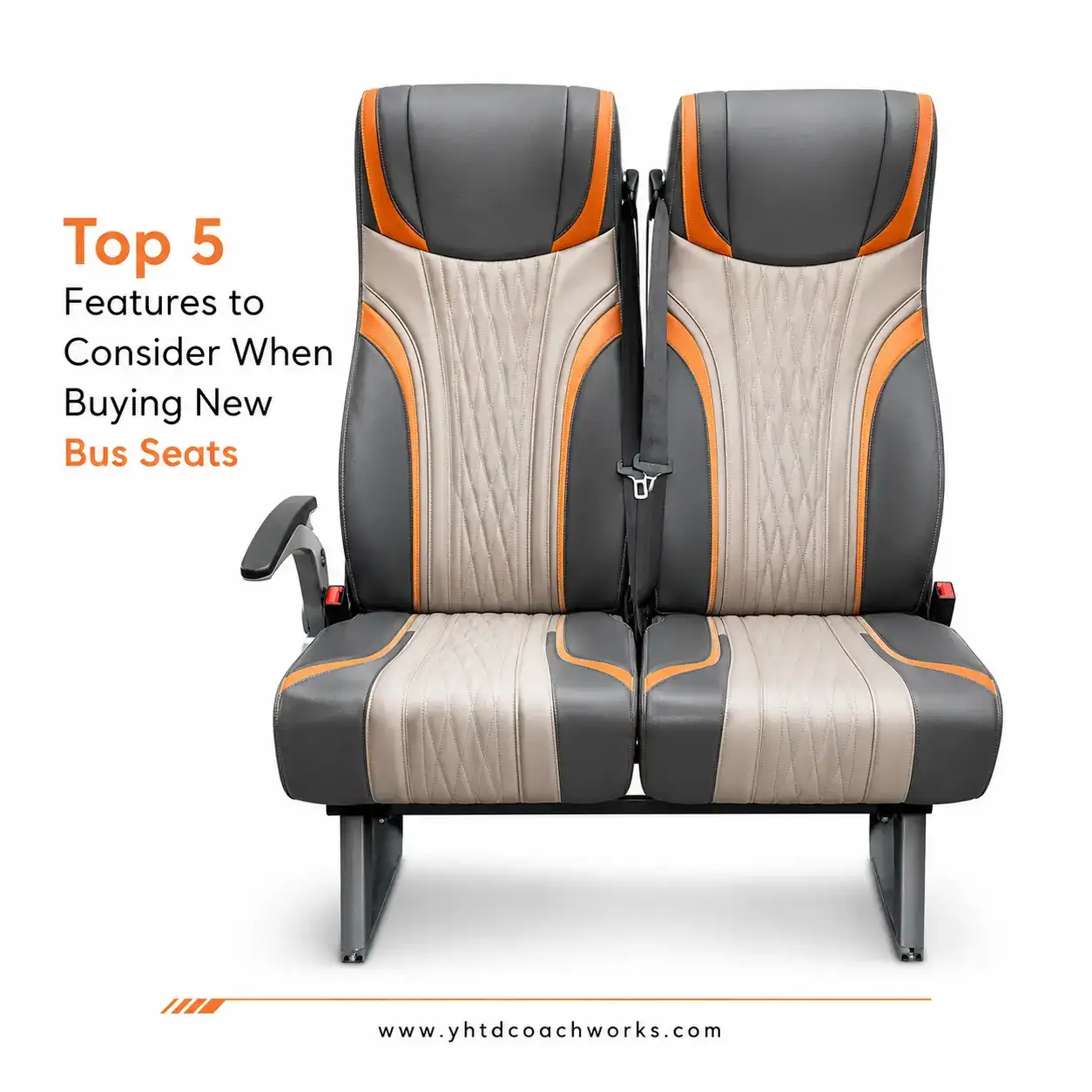
Features to Consider Buying Bus Seats
Choosing new bus seats is not simply a matter of comparing upholstery, colors, or unit prices. For auto modification studios and auto dealers, the seat you select affects passenger comfort, installation time, vehicle capacity, safety, and the overall value of the finished vehicle.
This becomes even more important when working with Sprinter van seats. A seat that looks suitable in a catalog may create problems once you consider floor structure, seat-belt integration, mounting points, aisle clearance, or the specific Sprinter configuration.
Before you place a bulk order, evaluate these five features.
1. Durability & Easy-to-Maintain Materials
Commercial and modified passenger vehicles see more demanding use than most private cars. Passengers enter and exit frequently. Seats are exposed to friction, spills, dust, and repeated cleaning.
That means appearance alone should not determine your choice.
What Materials Should Bus Buyers Look For?
Look for seat materials that balance durability, comfort, and maintenance requirements. Depending on the application, commercial-grade fabric, vinyl, synthetic leather, or other automotive-grade upholstery can be appropriate.
If you are an auto modification studio, the key question is not simply, "Does this material look premium?"
You must ask yourself:
- Can it withstand frequent passenger use?
- Is it easy to wipe or clean?
- Will the surface maintain its appearance over time?
- Are replacement covers available?
- Is the seat material compatible with the environment and climate in which the car will operate?
You should also examine the seat frame and structural components. A durable cover cannot compensate for a weak frame.
For auto dealers involved in reselling vehicles, ease of maintenance of a seat cover material maintainability has a direct commercial benefit. A vehicle that keeps its interior looking presentable requires less corrective work before resale or delivery.
Mercedes Sprinter seats tend to be quite common in the van category, and if you are sourcing these as a fleet owner or for automodification, then your main concern should be evaluating upholstery specifications alongside frame construction and hardware. Many of the these seats are customized and may appear very sylish but will be hard to maintain. The goal is a seat that remains serviceable after repeated use, not one that simply looks impressive when first installed.
2. Passenger Comfort & Ergonomic Design
A seat can meet basic dimensional requirements and still deliver a poor passenger experience.
Comfort matters particularly for shuttle vans, executive conversions, tourist vehicles, airport transfers, and other applications where passengers may spend significant time inside the vehicle.
Which Comfort Features Matter Most in Bus Seats?
For seating comfort you must look for the following features that are crucial for delivering comfort regardless of seat brand
- Adequate seat width
- Appropriate seat cushion depth
- Ergonomic backrest design
- Legroom space
- Proper head and shoulder support
- Suitable cushioning density and softness level
- Comfortable seating posture
- Armrests where appropriate
You should also consider how the seat performs for different passenger sizes. A narrow seat may help you maximize capacity, but excessive compression between seating positions can undermine comfort.
This is where different Sprinter van seating options become useful. If you are going for a customer-focused premium modification for luxury travel, then individual Sprinter captain seats are the right choice. But an ordinary passenger shuttle may benefit more from a well-designed bench configuration.
Do not judge comfort from photographs. If possible, inspect a sample seat physically before committing to a large order.
Sit in it. Check the cushion. Examine the backrest angle. Test the armrests and adjustment mechanisms.
3. Safety & Structural Performance
Safety should be one of your first purchasing criteria. Too many buyers treat it casually and neglect checking it until the last moment.
Seat construction, attachment points, seat-belt integration, and vehicle-floor compatibility all deserve careful evaluation since these are the features that save a life during accidents.
What Safety Factors Should Seat Buyers Check?
First, ask the supplier for applicable test reports, certification information, and installation documentation for the intended application.
In the United States, NHTSA regulations govern the seating safety features. They cover areas like seating systems and seat-belt anchorages. FMVSS 210, for example, establishes requirements concerning seat-belt assembly anchorages.
As a seating upfitter keep in mind that compliance cannot be evaluated by looking at the seat alone. The seat, mounting structure, belt anchorage, and vehicle installation can form one safety system and visual inspection is not enough to determine how safe and failproof it is. Hence, you need to check technical specs.
So before buying, verify:
- Seat-frame strength and test documentation
- Seat-belt compatibility
- Anchorage requirements
- Mounting hardware specifications
- Approved installation positions
- Vehicle-specific installation requirements
- Applicable regulations in your market
If the supplier cannot provide clear technical documentation, treat that as a procurement risk.
4. Dimensions, Layout & Vehicle Compatibility
The best seat on paper may be the wrong seat for your vehicle.
Dimensions determine how many passengers you can accommodate, how much aisle space remains, and whether the installation works with the vehicle's existing structure.
How Seat Dimensions Affect Bus Capacity?
A number of seat dimensions like seat width, cushion depth, backrest height, mounting footprint, and spacing between rows affect the final sitting space.
If you are outfitting common vehicle models like Mercedes vans then the standard seats are the Sprinter van seats. For those, you should measure the complete installation area rather than relying on nominal seat dimensions. Account for wheel wells, doors, interior panels, emergency exits, existing mounting points, and access paths.
This is particularly important when comparing Sprinter bench seats with individual captain-style configurations.
A bench may allow you to accommodate more passengers in a given footprint. Individual seats, however, can provide greater flexibility for premium layouts and passenger movement.
Before ordering, create a basic floor plan showing:
- Seat width and depth.
- Mounting-point locations.
- Row-to-row spacing.
- Aisle or walking clearance.
- Door and emergency-access areas.
- Seat-belt locations.
- Interior trim interference.
You should also confirm the exact Sprinter model year and configuration with your supplier. Mercedes-Benz provides Body and Equipment Guidelines for different Sprinter generations and model years, including the current 907 platform.
Compatibility of the seats with the vehicle is not a minor technical detail. It can determine whether your installation proceeds smoothly or requires expensive rework.
5. Customization, Modularity & Long-Term Value
Your customers will not all want the same vehicle interior. Some may want a premium executive shuttle. Others may prioritize passenger capacity, easy cleaning, or flexible seating and style would be the least of their worries.
Your seat supplier should therefore give you enough configuration flexibility to build different solutions without starting from scratch every time.
What Seat Customization Options Should Fleet Buyers Consider?
Depending on the supplier and vehicle model, consider the following:
- Upholstery colors and materials
- Seat-back styles
- Armrest configurations
- Reclining and seat adjustment features
- Individual versus bench layouts
- Headrest options
- Folding mechanisms
- Seat-belt
- Mounting and installation configurations
- Removable or modular seating
- Tailored branding or stitching
Modularity can be especially valuable for auto modification studios. If the same basic seat platform can support several layouts, you can simplify sourcing and standardize installation procedures.
Pay close attention to the Sprinter van seat mounting systems offered with the seats. A mounting solution should be compatible with the vehicle and the intended seat configuration, rather than treated as a generic accessory.
Long-term value also includes replacement parts. Ask whether the supplier can provide covers, brackets, adjustment components, mounting hardware, and other service parts later.
A low purchase price means little if replacement components are difficult to source.
Quick Bus Seat Buying Checklist
Use this checklist before approving a seat order for your next modification or vehicle program.
|
Criteria
|
What to Check
|
Why it Matters
|
|
Durability
|
Frame, upholstery, cushioning, cleaning requirements
|
Reduces maintenance and premature replacement
|
|
Comfort
|
Cushioning, width, backrest, legroom, armrests
|
Improves passenger experience
|
|
Safety
|
Test reports, belt compatibility, anchorages, mounting
|
Reduces installation and compliance risks
|
|
Dimensions
|
Width, depth, height, row spacing, mounting footprint
|
Prevents fitment and capacity problems
|
|
Compatibility
|
Vehicle model, year, floor structure, mounting locations
|
Helps avoid costly modifications
|
|
Customization
|
Materials, colors, seat layouts, accessories
|
Lets you meet different customer requirements
|
|
Mounting
|
Brackets, rails, bases, hardware, installation method
|
Supports secure and repeatable installation
|
|
Serviceability
|
Replacement covers and components
|
Protects long-term product value
|
Conclusion
For auto dealers and modification studios, the right bus seat is ultimately the one that works across the entire vehicle project. So regardless of whether you need individual Sprinter captain seats, Sprinter bench seats, or other Sprinter van seating options, start with vehicle compatibility and safety requirements. Then optimize comfort, appearance, and commercial value.
That approach gives you more than a good-looking interior. It gives you a repeatable seating solution you can confidently install, sell, and support.
FAQ
How Do I Choose Comfortable Bus Seats for Long Routes?
Your top priority should be looking for high‑density foam, lumbar support, and adjustable recline. For long routes, extra legroom and breathable upholstery make a big difference in passenger satisfaction.
What Materials Are Best-suited for Bus Seats?
That depends on the kind of routes the bus will traverse. Vinyl and leatherette are easy to clean for city buses, while fabric blends with moisture resistance work well for long‑distance travel. Always balance comfort with maintenance needs.
How Do Bus Seat Dimensions Affect Seating Capacity?
Wider seats improve comfort but downside is less seating capacity. Narrower seats maximize passenger numbers. The right balance depends on whether your priority is premium comfort or maximizing seating capacity.
What Should I Ask a Bus Seat Manufacturer Before Ordering?
Ask about customization options, compliance certifications, warranty terms, and after‑sales support.