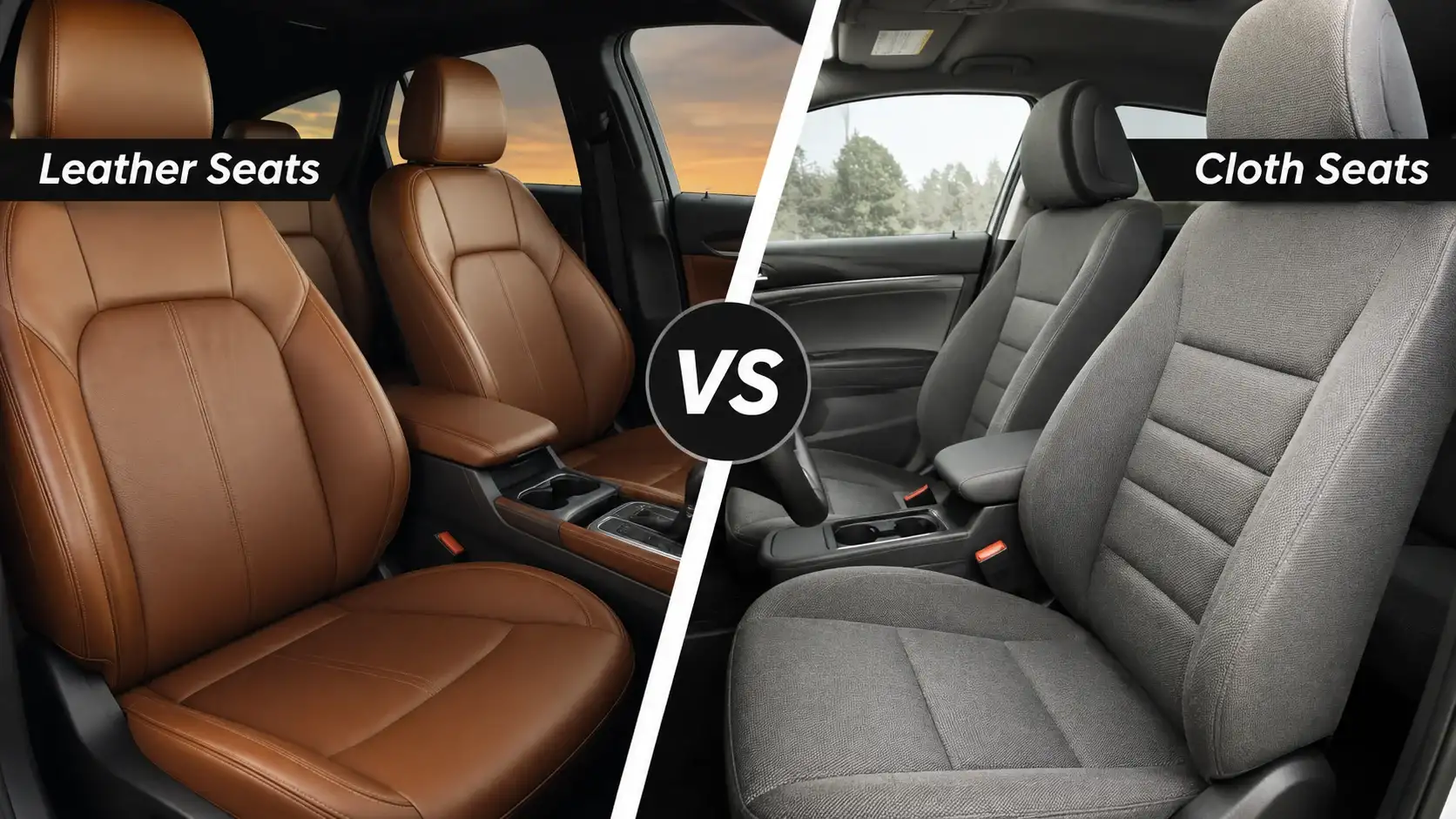
You have probably sat on both cloth and leather seats hundreds of times without giving it much thought. But the moment you are the one signing the seat material purchase paperwork, financing the vehicle, and committing to years of daily use, the decision suddenly feels a lot more personal. And it should.
The truth is, the difference between cloth and leather goes far beyond what looks better in a showroom. Leather seat maintenance becomes a recurring expense that takes away your time and budget. Cloth seat stains and odor turn a fresh interior into a problem faster than you might expect. And depending on where you live, the best seat material for hot climate conditions will not involve leather at all.
What Actually Changes Between Cloth and Leather Once You're the One Driving
So before you let visual appeal drive the decision, let's look at what is practical for your driving routine and lifestyle. For starters, leather offers a premium feel that most drivers instantly recognize. It looks sharper, has a unique scent, and signals a higher trim level. But that initial impression fades quickly when you realize leather is essentially a skin product. It breathes, it absorbs temperature, and it reacts to its environment.
Cloth, on the other hand, is more forgiving in everyday conditions. It does not get scorching hot in summer or freezing cold in winter the way leather does. Moreover, it tends to grip your body better, which matters more than you think during sharp turns or long highway stretches.
Climate Decides This More Than Preference Does
Here is something most buyers neglect to consider: your local climate should play a bigger role in your seat material choice than your personal taste. If you live in a region where summer temperatures regularly climb above 90 degrees Fahrenheit, leather seats can become genuinely uncomfortable. Getting into a car that has been parked in direct sunlight with leather seats is an experience that teaches you to park in the shade very quickly. In these conditions, synthetic leather car seats can offer a compromise, but they still retain more heat than traditional cloth.
On the other hand, if you live in a colder, damp climate, leather actually serves you better. It dries faster, and does not absorb humidity the way cloth does. But you really notice leather's value in its versatility. It is really compatible with heated and ventilated seats that many modern cars and trucks now include as standard or optional features. For premium van seating, heating and other comfort functions can also be built into individual captain seats. Heated seats work beautifully with leather because this material transfers warmth efficiently. For a broader look at premium seating configurations and features, you can also compare different options for executive Sprinter vans. Cloth fabric takes longer to warm up but also holds onto that warmth longer.
If you are deciding between these two materials consider the following:
Your climate does not just affect comfort in the moment. It also affects long-term durability, which brings us to the next point.
Daily Habits That Wear Seats Faster Than Most Drivers Expect
You might think seat wear is purely a function of time and mileage. In reality, it is your daily habits that determine how soon your seats start showing their age. And the material you choose dictates which habits cause the most damage.
Leather is vulnerable to friction, sharp objects, and body oils. If you regularly wear belt buckles that press against the seat back, or if you carry tools,or keys, that rub against the seat surface, you will start seeing scuff marks and micro-abrasions sooner than you would like. Over time, these small wear points deepen, and that is when leather seat cracking becomes a real concern. Once leather cracks, there is no reversing it without professional reupholstering.
Cloth, meanwhile, is far more resistant to surface abrasion. Its weakness is related to what you bring into the car. Sand, dirt, pet hair, food crumbs, and spilled beverages all get soaked or absorbed into the woven fibers. Over months and years, cloth seat stains and odor become permanent and no amount of vacuuming can erase them.
Here is what accelerates wear on each material:
- Prolonged sun exposure without UV protection
- Sharp belt buckles friction
- Sweat from gym clothing left sitting too long.
- Pet transport without seat covers
- Infrequent vacuuming that lets debris grind into fibers.
Neither material is indestructible. But the type of damage each one suffers is completely different. Consider your lifestyle when making the seat material choice. That is what will guide your selection decision.
Commercial, Rideshare, and High-Mileage Drivers
If you are driving for a rideshare platform, managing a fleet, or simply have long continuous driving hours, then the decision stakes shift again. For fleet and passenger transport applications, seat durability and easy maintenance become especially important. For commercial and high-mileage drivers, durability and cleanability have the highest priority, everything else is secondary.
Leather and synthetic options have easy to wipe surfaces. And this is a significant operational advantage as it shorens maintenance time, which is crucial for maintaining efficiency in a fast-paced transport business. A quick pass with a damp microfiber cloth can reset the seat surface in seconds. With cloth, a spilled drink from a passenger becomes a fifteen-minute problem involving stain remover, blotting, and drying time.
Compared to cloth, leather seats require more proactive care to hold up under heavy use. Regular conditioning is a must otherwise seats will dry out and crack faster in a commercial setting than cloth. For rideshare drivers in particular, synthetic leather car seats often represent the smartest middle ground: they offer the cleanability of leather with more resilience and a lower price point.
Maintenance Reality — Spills, Stains, and Long-Term Care
Let's review the maintainence demands of each material over a five-year ownership period.
Leather seat maintenance is not complicated, but it requires consistency. You need to clean the seats every few weeks with a pH-balanced leather cleaner, apply a conditioner every two to three months to prevent drying, and use a UV protectant if your vehicle is regularly parked outdoors. Skip any of these steps and you will see the consequences within a year or two. That means fading, stiffness, and eventually cracking along stress points like the side bolsters and seat base.
Cloth covers maintenance is less about cleaning products and more about preventive care. That involves regular vacuuming, treating spills immediately before they get absorbed, and use of fabric protectors to add a layer of resistance. Even so, cloth will eventually soak in odors, especially if you transport pets, eat in the car, or live in a humid climate where moisture gets trapped in the fibers.
Here is a quick comparison of maintenance demands:
Leatherette and Premium Cloth: The Middle-Ground Options Most Comparisons Skip
Most articles you will find online treat material selection as a binary choice: leather or cloth with no in-between. But the reality is that modern seat materials include many synthetic options that have qualities of both materials, and this is where many drivers find their best fit.
Leatherette, also known as synthetic leather or vegan leather, has improved dramatically over the past decade. Modern synthetic leather car seats mimic the look and feel of genuine leather closely enough that it is not noticeable. They are much tougher and resistant to cracking. Maintaining them is also easier and significantly cheaper. For drivers who want the stylish appeal of leather without the cleaning hassles, leatherette is a wonderful and practical option.
Industrial advancement has also enhanced the quality of premium cloth fabrics. Automakers now offer diverse options of high-grade woven materials with stain-resistant coatings. These fabrics are also breathable. The weaves resist pilling and fading. Such upgraded cloth options bridge the gap between budget fabric and luxury leather, giving you a refined interior that does not need much maintenance effort.
What to Check Before Buying a Vehicle With Either Material
Before you finalize your purchase, take a few minutes to evaluate the seat material with seriousness.
Ultimately, the correct choice comes down to multiple factors like your climate, your daily habits, and how much time you are willing to invest in upkeep. There is no universally perfect material. The only appraoch is to decide based on the framework we have discussed throughout the blog.
FAQs
Does leather increase a car's resale value?
Yes, it usually does. Buyers often see leather as a premium upgrade, so it can make your car more appealing and help retain value.
Are leather seats a problem for people with allergies?
Not typically. Leather doesn’t trap dust and allergens the way fabric can, so many people actually find it easier to keep clean and allergy‑friendly.
Do ventilated seats actually solve leather's heat problem?
They help a lot. Ventilated seats circulate air, which keeps leather cooler and more comfortable, especially in hot climates.