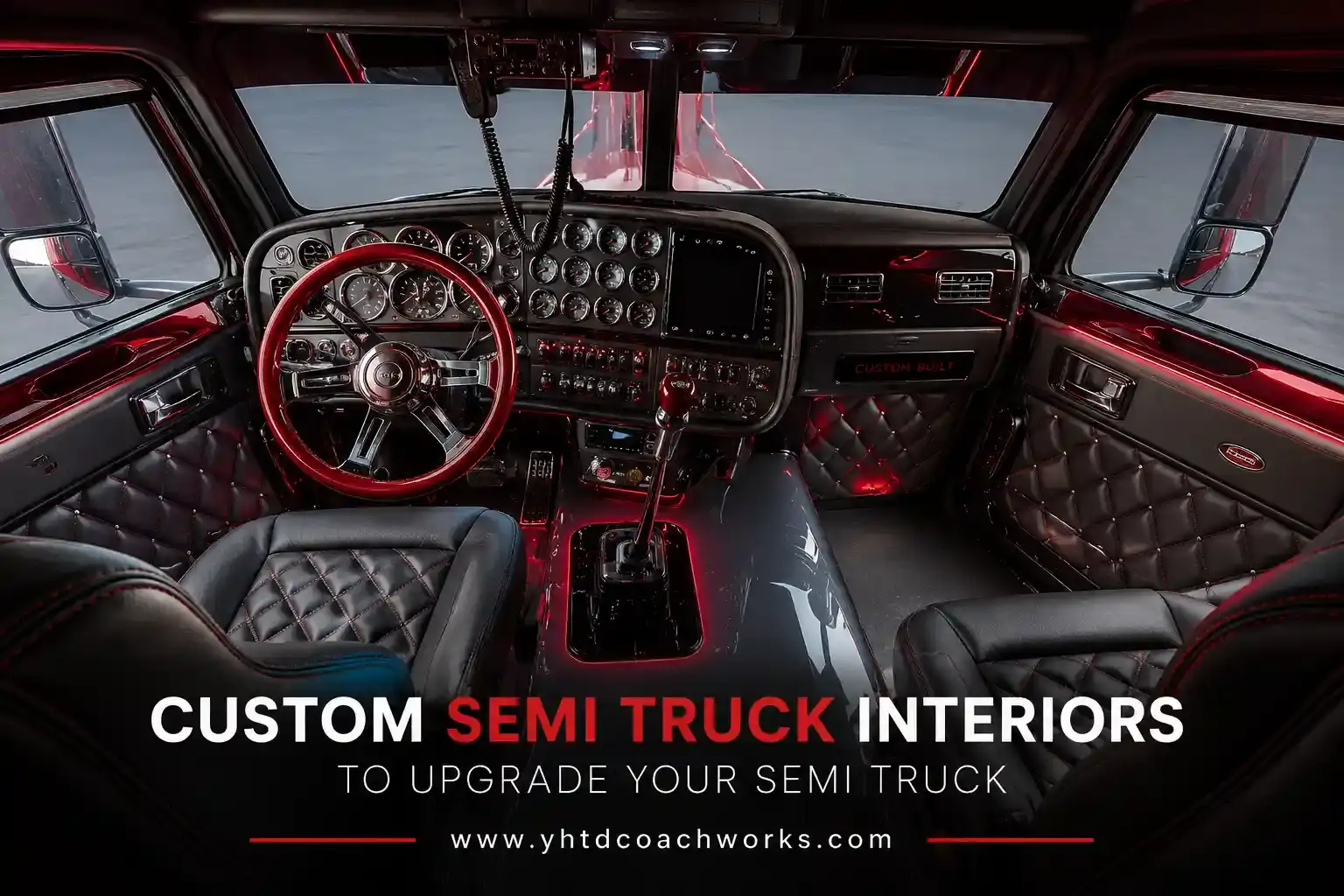
Custom Semi Truck Interiors to Upgrade Your Semi Truck
When you spend long hours on the road, your truck interior becomes more than a cab. It is your workspace, resting area, dining space, and personal environment. A well-planned interior can make daily driving more comfortable, improve organization, and help your truck feel more like your own.
Custom Semi Truck Interiors to Upgrade Your Semi Truck can range from simple seat improvements to a complete sleeper cab renovation. The right approach depends on your truck model, driving routine, design preferences, and budget. You can start with one high-impact upgrade or create a complete plan for semi truck interior customization.
This guide explains what you can customize, which upgrades offer the most practical value, and what to check before ordering components.
What Can You Customize Inside a Semi Truck?
You can customize nearly every visible and functional part of a semi truck cab. Common improvements include seating, upholstery, flooring, door panels, headliners, storage, lighting, and sleeper features.
Some upgrades focus mainly on appearance. Others improve comfort, durability, or organization. The best results usually combine all three. For example, a new seat design may improve the look of your cab while also providing better support during long trips.
Popular customization areas in a truck interior consist of
A custom semi truck interior should support your driving routine. Before choosing materials or accessories, you need to think about how often you drive, where you sleep, how much storage you need, and how much cleaning your interior requires on a regular basis.
Driver Area & Sleeper Cab
The driver area is the space where you spend the most time inside the truck. Small changes can make it easier to enter, exit, work, and stay comfortable throughout the day. From a customization perspective, you can choose upgraded seats, a redesigned dashboard, improved floor protection, or new door panels.
Your sleeper cab deserves the same level of attention. A comfortable semi truck sleeper interior can help you rest more effectively between driving shifts. Useful sleeper improvements include:
Think about your activities in the sleeper area. Frequently used items should be easy to reach, while less important belongings can stay in overhead or under-bunk storage. This approach helps you maintain a cleaner, more functional cab.
High-Impact Interior Upgrades
Not every upgrade will drastically change your driving experience. Some features provide an immediate improvement in comfort, while others make your truck easier to maintain.
Start with the parts you use the most on a daily basis. For many drivers, this means the seat, floor, sleeper, and storage system. Once those areas have been customized, you can move on to decorative details and additional accessories.
Custom Seats & Upholstery
Your seat affects your posture, ride comfort and ability to stay focused during long drives. If your current seat has cushioning that is worn out, or provides limited back support, replacing or rebuilding it can make a noticeable improvement
Custom truck upholstery allows you plenty of choice regarding options and offers you VIP seats. You can personalize materials, colors, stitching, patterns, and padding levels that suit your needs.
Common upholstery material options include:
Leather can provide a premium appearance and is relatively easy to wipe clean. Vinyl is also practical for busy work environments because it resists many spills and can be maintained with regular cleaning. Fabric may offer more breathability, especially in warmer conditions, but it may require more care.
When choosing custom truck upholstery, look carefully at the specs and features. Moroever, be meticulous and detail-oriented and ask about seam strength, foam density, stain resistance, heat performance, and repair options. A visually attractive material may not be suitable for constant use if it wears out quickly or requires frequent and expensive maintenance.
Custom seat designs include lumbar support, additional cushioning, reinforced side bolsters, and personalized stitching. These details are important for seating comfort and help you create a custom semi truck interior so be practical when deciding.
Flooring, Panels & Headliners
Flooring receives constant traffic from boots, tools, food, moisture, and road debris. Replacing worn flooring is one of the most practical semi truck interior upgrades you can make.
Common flooring choices include various materials such as,
Carpet can provide a warmer, cozy feel, but it requires regular vacuuming and stain treatment. Rubber and vinyl are easier to wipe clean and are a more convenient choice for drivers who frequently drive in conditions that are muddy, moist, or dusty.
Interior panels can also refresh the appearance of an older cab. Door panels, wall panels, and dashboard trim can be replaced or refinished with matching colors and textures. A new headliner can make the cab look cleaner while covering stains, sagging material, or surface damage.
Before ordering panels or flooring, check the shape of the floor, seat mounts, pedals, storage compartments, and access covers. Even a small measurement error can make installation difficult.
Storage, Lighting & Convenience
A cluttered cab can make daily routines more difficult. Better storage helps you keep personal items, paperwork, tools, food, and electronics organized.
Useful semi truck interior accessories depend on truck model and brand but generally include:
Lighting is another practical improvement. LED strips, reading lights, and task lighting can improve visibility inside the sleeper without creating unnecessary glare. Place lights where you can reach them easily, but avoid positioning them where they interfere with driving visibility.
When adding semi truck interior accessories, confirm that they do not block controls, air vents, emergency equipment, or access points. Convenience should never come at the expense of safe operation.
Partial vs Full Interior Customization
|
Aspect
|
Partial Customization
|
Full Customization
|
|
Best for
|
Drivers who need targeted improvements or have a limited budget
|
Owner-operators, show truck owners, premium fleets, and complete restoration projects
|
|
Project scope
|
Focuses on selected areas such as seating, flooring, lighting, or storage
|
Renovates multiple areas, including seats, upholstery, flooring, panels, headliners, storage, lighting, and sleeper features
|
|
Typical upgrades
|
New seat covers, upgraded floor mats, LED lights, storage accessories, or replacement panels
|
Coordinated upholstery, custom flooring, redesigned panels, sleeper improvements, integrated storage, lighting, and decorative trim
|
|
Initial cost
|
Lower upfront investment
|
Higher upfront investment
|
|
Installation time
|
Usually shorter and may involve minimal downtime
|
Often requires more planning, labor, and truck downtime
|
|
Design flexibility
|
Allows you to improve specific problem areas without changing the entire cab
|
Gives you greater control over colors, materials, finishes, stitching, layout, and overall style
|
|
Comfort improvements
|
Targets specific needs, such as better seating or sleeper support
|
Creates a complete comfort-focused environment throughout the cab and sleeper
|
|
Durability improvements
|
Replaces worn or damaged materials in high-use areas
|
Allows you to select durable materials for the entire interior
|
|
Maintenance
|
May leave older materials that require separate cleaning and care
|
Provides a more consistent interior with coordinated maintenance requirements
|
|
Fitment considerations
|
Fewer components need to be measured and installed
|
Every component must match the truck model, cab style, sleeper configuration, and existing layout
|
|
Upgrade flexibility
|
Makes it easier to complete the project in stages
|
Requires more decisions before work begins
|
|
Long-term value
|
Helps extend the life of specific interior components
|
Can significantly refresh the truck and create a cohesive, long-term interior design
|
|
Potential limitation
|
New components may not match the original interior perfectly
|
Higher cost and greater planning requirements
|
|
Recommended approach
|
Prioritize upgrades that affect comfort, safety, organization, or daily use
|
Develop a complete design plan before ordering materials or scheduling installation
|
Choosing Upgrades Based on Budget and Use
Divide your budget into three categories:
-
Comfort and driver support
-
Durability and maintenance
-
Appearance and personalization
Start with upgrades that affect your daily experience. For example, a long-haul driver may benefit most from improved seating and a better semi truck sleeper interior. But a local driver may prioritize floor protection, and easy-access storage more than seating customizations.
Fleet managers should focus on materials that are easy to clean and replace. Show truck owners may place greater emphasis on detailed upholstery, decorative trim, and coordinated finishes.
A staged plan can help you manage costs:
This process helps you invest in custom semi truck interiors without paying for features that do not support your specific needs.