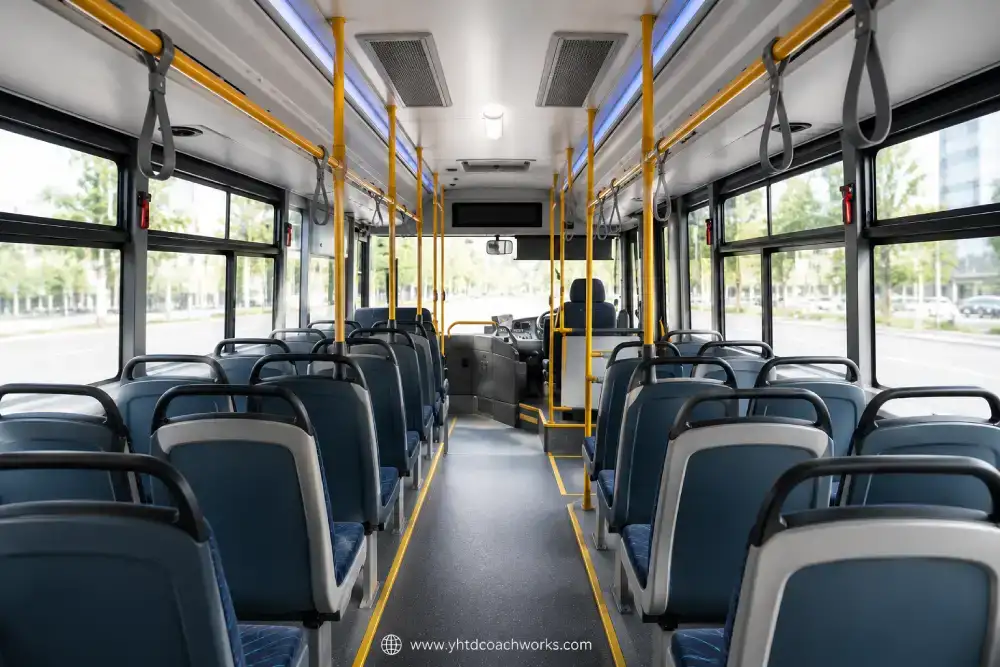
Bus Seat Buying Guide
Bus travel is not just about covering some distance; it is about living every moment. That means passengers need comfort, ergonomic stability, and safety throughout the journey. Fleet, travel and tour, shuttle service, and intercity transportation companies have to source bus seats very carefully. They have to consider the type and material of the seats, and also layout of buses. Lots of factors are part of the selection process, and you can find everything in this blog.
How to Choose the Right Bus Seats for Your Fleet
You need to consider a lot of factors to select the kind of bus seats that meet your requirements. Only a bus seat buying guide from an expert can help you decide better. There are more than three types of bus seats you can find in the transport industry. They have different structures, comfort levels, and costs. What you need to do is find out about all these types for higher clarity.
Types of Bus Seats
Before you choose a bus seat manufacturer, ask them about the varieties available in their production. These varieties will help you choose which one can fit the best. You need to manage the space, layout, and cost of your bus seating process. Here are these four global types that can make things easier to understand.
High-Back Reclining Bus Seats
Most buyers choose the high-back type when selecting commercial bus seats. Their backrest is higher than standard length. High-back reclining bus seats provide the most comfort for the back by covering the entire area from head to tailbone. Also, the reclining system is similar to aircraft seats for long-hour traveling. Inter-city buses, motorcoaches, and sleeper coaches demand high-back reclining seats. If you have a similar requirement, they are a compatible choice. However, their cost is higher than standard types.
Folding Jump Seats
They are suitable for minibusses. If you are buying for an office, picnic, or short-journey bus, you can try folding jump seats. A bus seat supplier can provide these seats with a quick folding and unfolding facility. It helps to expand space as per requirements. For instance, users can fold seats if there are fewer passengers and more stuff. It allows them to adjust space without facing any fixed shortage. However, folding hump seats have short backrests, which can cause back pain in long journeys. These seats provide more space for passengers to fill the last seats first.
School Bus Seats
If you are looking for bus passenger seats specifically for kids, school bus seats are the best choice. They have a short backrest, which is the ideal length for kids. They have a combined structure where three kids can sit easily on a single wide seat. The short backrest also provides clear visibility for the driver or senior to keep an eye on or count kids. They provide comfort and easy maintenance.
Luxury Bus Seats
Then you have the last option, which is about high luxury. High-end shuttle service, tour buses, motorcoaches, and transit buses usually have luxury seats. Everything in them is of superior quality for a superior travel experience. Additional features like cup holders, USB ports, touchscreen buttons, and a massage system take passenger satisfaction to a whole new level. However, the price is the highest of luxury bus seats.
Key Factors to Consider When Buying Bus Seats
It is not just about the seat type; it is more than that. What if the seats do not match the layout of your bus? What if the bus is too basic but the features seem to be mismatched? There are lots of factors that can affect your decision.
Space
Every bus has a limited space, which allows you to install a specific maximum number of seats. For instance, if you are buying coach bus seats, you need to have that much space to install them. These seats can not fit well in a minibus or school bus. There are different seat limits like 24, 35, 48, 57, and 70 seats in each type of bus. You need to measure the space inside the bus and the estimated distance between each seat. Then you will be able to select seats precisely.
Comfort
Some seats have basic comfort, and some have a premium level. The cost will also vary accordingly. If you are looking for high comfort and also decent cost, you need to inspect PU foam’s thickness. The retentivity and softness will have to be as per the desired objective. Usually, school buses have basic foam because kids travel for just a few minutes or an hour depending on the school’s distance. When it comes to long journeys, the comfort level has to be high to prevent back pain.
Ergonomics
Selecting bus seat types is completely based on ergonomics. Missing this part means you missed the pillar of meeting passenger satisfaction. The height, curve, and cushioning of the backrest, armrest, and seat have to provide full spinal support. Neither back, neck, hip, nor shoulder pain should occur. It also contains safety belts to hold passengers safely against shocks and accidents.
Durability
How long the foam of seats can provide consistent compression shows how durable bus seats are. They have to withstand wear and tear for at least five years, depending on the usage level. It is also about the upholstery and metal frame. How long hardware, such as fasteners and bolts, can remain intact is also part of it. You need to make sure they are easily maintainable, too.
Material
Usually, PU foam cushion is used as the core of bus seats. Its density plays a core role in the quality of seats. What covers it is the upholstery, which is usually of leatherette. Faux leather of PU, PVC, and similar plastics provides long-term support since they are water-and-stain-resistant materials. ABS shell is also part of the material that provides support in structure and comfort. A steel frame is common because it provides higher strength than aluminum. However, aluminum is cost-effective and lightweight.
· Grade 1 and 2 are for basic material that is low-cost and easy to maintain.
· Grade 3 is medium level, which provides a midway for decent durability and maintenance.
· Grade 4 and 5 are premium grades for high-end seats.
Bus Seat Dimensions, Layout, & Compatibility
You need to look at this section also, because it will help you decide whether your selected seats can fit well or not. The dimensions of seats are usually similar, but a few types have some differences. It is better if you look into the details.
Dimensions
Dimensions of coach seats are the same as those of public buses and minibusses.
· Their width is 17.5 inches, and you can save it.
· If it is a double-format seat, the width of each seat will be 34 inches.
· The backrest’s height is 30 inches.
· Legroom is 10.5 inches.
· Seat pitch, or distance between each seat, is 32 inches.
· Hip-to-knee space is 30 inches.
However, school bus seats have some different dimensions. They are 38 inches wide, which makes each seat good enough to accommodate three kids. School bus seats’ backrest height is low, which is 24 inches.
Layout
Make sure you know the layout of the bus, because different buses have different layouts. Since their seating capacities are different, their layouts also vary. As we shared in the start of the blog, seating limits are usually 24, 35, 48, 57, and 70 seats; you can have a reminder here. It will help you arrange them as per a 2x3 or 2x2 format. These are the common formats where one row has a 2-seat format, and the other row has a 3-seat format. Some have a 2-seat format in both rows.
A longitudinal format has all the seats with the inner walls of the bus. They are placed against the windows, and they face the center aisle. Another type of longitudinal format has all the seats with the inner wall or windows, and each pair faces another pair. This format provides much wider space in the middle area for people to leave and enter the bus. However, a longitudinal format is not very comfortable for sharp turns.
How to Evaluate a Bus Seat Manufacturer or Supplier
You need to follow THIS list of protocols to evaluate a manufacturer before you finalize one.
· Ask for certifications and safety standards like FMVSS and ECE.
· Material grade must match the quality being promised by the manufacturer. There are like five grades, and a higher grade shows higher quality.
· That manufacturer or supplier must have at least five years of production experience in the industry.
· Production capacity must meet bulk requirements where a manufacturer can supply at least hundreds of units. They also need to have varieties for an easier selection process.
· Price must be market competitive. However, a too-low price is a sign of suspicion.
· Supply capacity should be global.
· Seats must be compatible with local maintenance and parts availability.
· Quality must be consistent in each batch.
Bus Seat Cost & Long-Term Value
Bus seats can last from 8 to 10 years if used around 6 days a week. There are many factors behind it, which affect the durability level. However, choose a supplier who can offer a price that provides good return on investment. There are some suppliers available in the industry that can provide affordable supply and durable quality for high ROIs.
Bus Seat Buying Checklist
Here is the highlight of the guide, and it contains all the factors you must remember. Following these factors will help you choose exactly the kind of bus seats you need.
· Seat types
· Comfort level
· Material quality
· Ergonomics
· Additional Features
· Durability
· Space inside bus
· Bus layout
· Dimensions of seats
· Seat dimensions
· Price
· Supplier’s certifications and tests
FAQs
What are the Different Types of Bus Seats?
There are mostly four types of bus seats that cover the entire bus industry. They are high-back reclining bus seats, folding jump seats, school bus seats, and luxury bus seats.
How Do I Choose the Right Bus Seats for My Fleet?
Choose the type of bus seat that meets your route length. If it is a long route, choose high-back reclining bus seats. If it is a short route, folding hump seats and even high-back types are suitable. If you focus on luxury regardless of route type, go for luxury bus seats. Also, look for high durability, material quality, ergonomics, and bus layout. Your selected seat must fit the space inside the bus.
What Is the Difference Between 2×2 and 2×1 Bus Seating?
It is about the seat placement on each aisle of the bus. In 2x2, both aisles have a pair of seats, and passengers have space in the middle to stand or leave the bus. 2x1 contains one aisle with two seats and the other aisle with one seat.
What Materials are Commonly Used for Bus Seats?
For cushions, manufacturers use PU foam. For upholstery, they use leatherette. Besides, they use ABS shells and steel/aluminum frames.
What Should I Ask a Bus Seat Manufacturer Before Ordering?
You need to ask for production certificates like FMVSS and ECE. Also, ask for the quality of the seat belts, cushion, upholstery, and frame. Make sure the seats have flame-retardant material.